
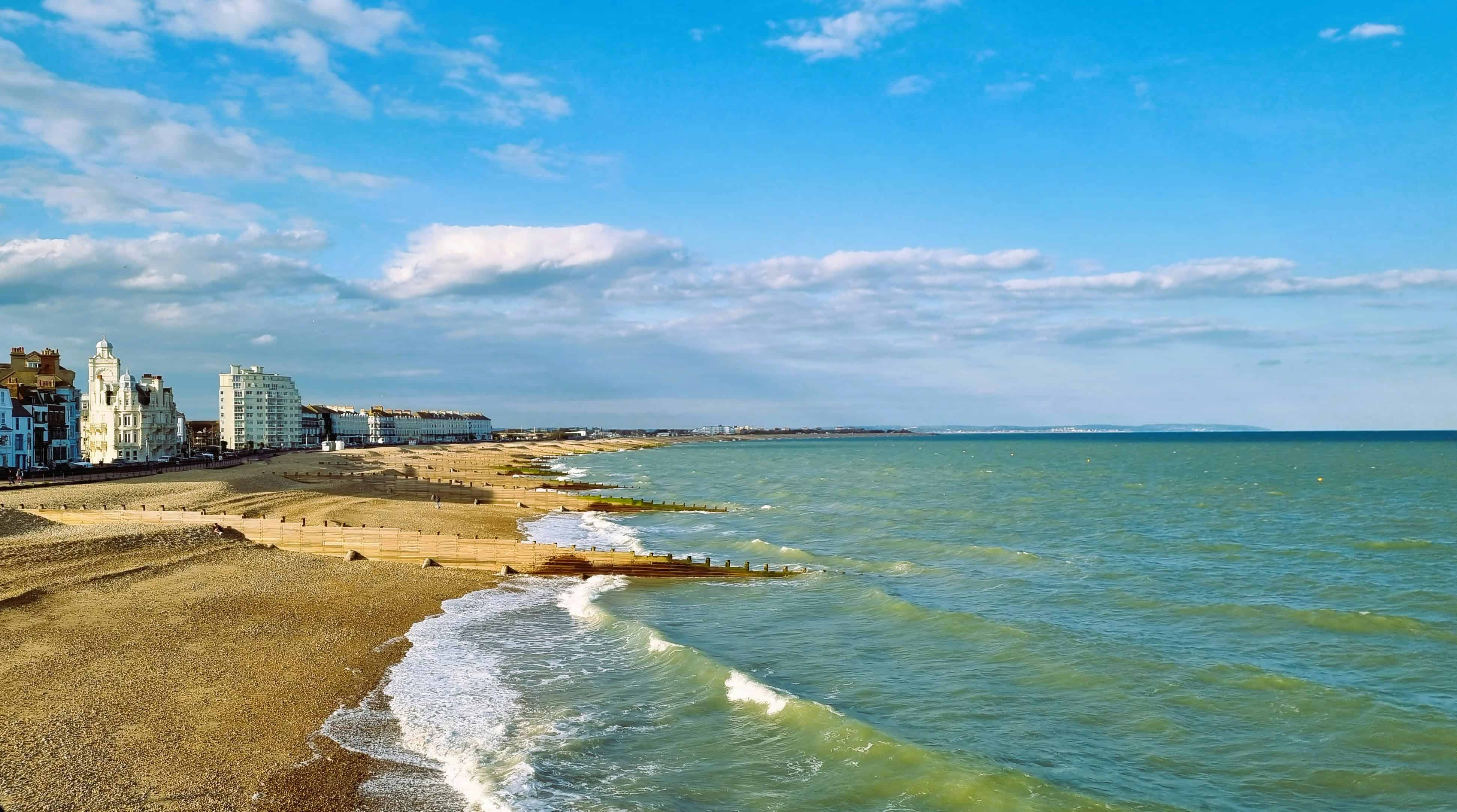
See below for best places to live in Sussex
Sussex has a way of getting under your skin. Whether it’s the wide shingle beaches of the coast, the rolling green folds of the South Downs, or the handsome market towns tucked between the two, there’s a quality of life here that’s genuinely hard to find elsewhere in the South East. And with London just an hour away by train from many parts of the county, it’s no surprise that Sussex continues to attract families, professionals, retirees and first-time buyers in equal measure. If you’re weighing up a move, here’s an honest look at some of the best places to put down roots.
Brighton & Hove

There’s nowhere quite like Brighton & Hove. A city in everything but the stuffiness, it combines the energy of a creative, cosmopolitan hub with the genuine laid-back pleasure of a seaside town. The Lanes are a maze of independent shops, vintage boutiques and excellent restaurants; the North Laine neighbourhood buzzes with cafés, galleries and street art; and the seafront promenade — stretching all the way from Hove Lawns to the Palace Pier — is one of the finest in the country for an aimless afternoon walk.
Housing in Brighton & Hove ranges from grand Regency terraces and handsome Victorian semis in areas like Seven Dials and Preston Park, through to modern flats along the seafront and more affordable terraced streets in Moulsecoomb and Whitehawk. Hove tends to feel quieter and slightly more family-oriented than its neighbour, with wider avenues, larger gardens and a calmer pace — yet you’re still just minutes from everything Brighton has to offer.
Fast trains reach London Victoria and London Bridge in around 50–55 minutes, making Brighton one of the most practical commuter destinations in the South East. Schools are a genuine strong point too — the city has a range of well-regarded state primaries and secondaries, alongside independent options such as Brighton College and Roedean. For culture, sport and nightlife, Brighton needs no introduction: the city hosts some of the UK’s most popular festivals, has a thriving arts scene and offers something for every age and taste. If you’re considering removals in Brighton & Hove, our team knows the city’s streets, parking restrictions and building types inside out.
Lewes
Lewes is one of those towns that feels almost impossibly well-preserved — a medieval county town perched on a chalk ridge above the River Ouse, with a Norman castle, Georgian high street and a fiercely independent spirit that expresses itself most memorably on Bonfire Night, when the town puts on one of the most spectacular fire festivals in Europe. It’s a place that takes culture seriously, with strong connections to the arts, a thriving local food scene and the famous Glyndebourne opera house just a few miles away.
Property in Lewes tends to sell quickly and commands a premium for good reason. You’ll find everything from listed flint cottages and Georgian townhouses on the high street to newer developments on the edge of town. The surrounding villages — Ditchling, Plumpton, Ringmer — offer similarly beautiful homes with more space at slightly lower price points. Schools are generally well-regarded, and the town’s size means a genuine community feel that larger towns sometimes struggle to maintain.
Trains to London Bridge take around an hour, and Brighton is just 15 minutes away — so Lewes occupies a genuinely sweet spot for those who want the countryside on their doorstep without sacrificing connectivity. The South Downs National Park wraps around the town, offering world-class walking, cycling and riding from your front door.
Chichester
Chichester is West Sussex at its most refined. A Roman city at heart — you can still trace the original grid of streets — it has grown into one of the most attractive and liveable small cities in the country. The Cathedral dominates the skyline and the historic centre is compact enough to walk across in 20 minutes, yet it contains an excellent range of independent shops, cafés and restaurants. The Chichester Festival Theatre is genuinely world-class, regularly transferring productions to the West End, and the harbour — a vast, shallow estuary beloved by sailors and birdwatchers alike — is one of the defining landscapes of the county.
Housing here tends to attract those who want quality and space. The city centre has beautiful period properties — Georgian and Victorian terraces and townhouses — while the surrounding villages such as Bosham, Fishbourne and East Wittering offer a more rural lifestyle with easy access to the harbour and coast. Prices reflect the desirability of the area, but Chichester generally represents better value per square foot than equivalent market towns closer to London.
Rail connections run to London Victoria in around 90 minutes, which makes Chichester more popular with remote workers and retirees than full-time commuters — though many manage it happily. State schooling is strong, with several Ofsted-rated outstanding primaries and secondaries, and the independent sector is well-served by Prebendal School and The Westbourne School nearby.
Horsham
Horsham occupies a particular niche in the Sussex property market: a proper market town with real history and character, yet one that’s close enough to London to make serious commuting possible. The Causeway — a picturesque street of timber-framed buildings leading to the medieval church — is one of the most photographed streetscapes in West Sussex, and the broad, pedestrianised town centre has a good mix of independent and high-street retailers. The Carfax, the town’s historic marketplace, still hosts a weekly market.
Families are particularly well served here. Housing stock ranges from handsome Victorian and Edwardian houses close to the town centre through to large modern family homes on the town’s several residential estates. The surrounding villages — Billingshurst, Henfield, Slinfold — offer a quieter pace with good road links back into Horsham for shopping and schooling. The schools themselves are a major draw: Tanbridge House and Forest School both have strong local reputations, and there are several well-regarded primaries throughout the district.
Fast trains to London Bridge and Victoria take around 55 minutes, making Horsham one of the most practical commuter towns in West Sussex. Leisure options are solid too: Horsham Park is a lovely green lung at the heart of the town, and the nearby Weald and St Leonard’s Forest offer outstanding countryside for walking and cycling.
Haywards Heath
Haywards Heath is perhaps the most straightforwardly practical of the Sussex commuter towns — and that’s very much meant as a compliment. Sitting at the geographic heart of the county, roughly equidistant between Brighton and London, it offers fast rail connections that make the commute more manageable than almost anywhere else in Sussex. The town itself is pleasant rather than postcard-pretty, but what it lacks in heritage architecture it more than makes up for in day-to-day liveability.
The housing offer is broad: large Victorian and Edwardian semis and detached houses in sought-after roads like Western Road and Oathall Road sit alongside newer estates that offer excellent value for the square footage. The surrounding villages of Lindfield, Cuckfield and Ardingly are genuinely lovely — Lindfield in particular, with its wide village green, duck pond and handsome high street, regularly tops polls of the prettiest villages in Sussex.
Trains reach London Bridge in around 45–50 minutes, making this one of the fastest journeys in the county. Schooling is well-regarded across the board, and for leisure the town benefits from Beech Hurst Gardens, the Victoria Leisure Centre, and easy access to the High Weald Area of Outstanding Natural Beauty for weekend walking and exploration.
Worthing
Worthing has undergone a quiet but unmistakable transformation over the past decade. Long dismissed as the quieter, more sedate neighbour to Brighton, it has gradually become one of the most talked-about destinations in Sussex — attracting younger buyers, creative businesses and independent restaurants at a rate that would have surprised residents ten years ago. The seafront is genuinely beautiful, the pier is one of the finest traditional seaside piers on the south coast, and the town centre is increasingly alive with interesting independents alongside the usual high-street staples.
For buyers, Worthing represents outstanding value by Sussex standards. You can still find spacious Victorian and Edwardian terraces and semis at prices well below Brighton equivalents, and the seafront flats — with views across the Channel — punch well above their weight for lifestyle. Families are well served by a good range of primary and secondary schools, and the town has a strong community feel that tends to be intensely local in the best possible sense.
Trains to London Bridge take around 80 minutes, and Brighton is just 20 minutes away — making Worthing a realistic option for those who want coastal living without the Brighton price tag. The Downs are just a short drive to the north, and the town’s own parks, leisure centre and arts scene ensure there’s always something to do without leaving.
Eastbourne

Eastbourne is a town that rewards a closer look. Yes, it has a reputation as a retirement destination — and there’s no denying that the broad, meticulously maintained seafront, the elegant Victorian hotels and the slower pace of life have long attracted those looking for a quiet life by the sea. But Eastbourne is also a town of real substance: the Towner Eastbourne gallery is one of the finest contemporary art museums in the South East; the Devonshire Park Theatre hosts world-class tennis during the pre-Wimbledon grass court season; and the seafront, flanked by Beachy Head to the west and the Long Man of Wilmington to the north, offers some of the most dramatic scenery in Sussex.
Property prices remain among the most accessible on the Sussex coast, making Eastbourne a genuine opportunity for first-time buyers and those looking to trade up to a larger home. The grand seafront hotels have given way to luxury apartments, but venture a little inland and you’ll find excellent Victorian terraces, substantial semis and well-maintained Edwardian houses at prices that feel almost generous by comparison with the rest of the county. Meads, the village-like neighbourhood tucked beneath the cliffs, is particularly sought after.
Trains to London Bridge and Victoria take around 90 minutes, which tends to attract those working flexible or hybrid schedules. Schools are a genuine strength — Eastbourne College is one of the South East’s leading independent schools, and the state sector has several well-regarded primaries and secondaries. For those who love the outdoors, the South Downs National Park begins at the town’s edge, and Beachy Head itself is one of the most iconic walking destinations in the UK.
Planning a Move to Sussex?
Wherever in the county you’re heading, moving to a new home is one of the biggest undertakings most of us ever manage — and getting the removal right makes all the difference to how the whole experience feels. At DK Trusted Removals, we specialise in removals in Sussex and across the wider South East. We know the county’s roads, its towns, its parking quirks and its trickier streets — and we bring that local knowledge to every job we take on.
Whether you’re moving into a Victorian terrace in Brighton, a village cottage near Lewes or a family home in Horsham, our team will handle your belongings with care and get you settled in without the stress. Ready to take the next step? Get a free quote from us today — we’d love to help make your Sussex move one to remember for all the right reasons.